The Best Buxus Fertiliser for UK Box Hedges
Why does box need a specific fertiliser?
Two reasons. Box is a slow, dense grower that holds its leaves for several years, so it wants steady, low-level feeding rather than a growth spurt. And box is unusually prone to magnesium deficiency, which is what turns a hedge that yellow-bronze colour people often mistake for disease.
A general-purpose high-nitrogen feed does the opposite of what you want: fast, soft growth with thin cell walls, which frost damages and blight colonises easily. It is a real risk rather than a theoretical one — the year I fed a hedge with lawn-grade fertiliser I got the worst blight I have ever had.
A defoliated hedge needs feeding to rebuild leaf, and a general high-nitrogen fertiliser gives you soft growth that frost and blight then take. This is formulated for Buxus, with the magnesium that keeps box deep green rather than yellow-bronze.
Check price on AmazonWhen should you feed box?
| When | What | Why |
|---|---|---|
| March–April | Granular Buxus feed | Fuels the spring flush as growth restarts |
| June–July | Second granular application | Supports the second flush and hardens growth for winter |
| Through summer, if recovering | Foliar feed every 4–6 weeks | Acts through the leaf; much faster on a stripped plant |
| August onwards | Nothing | Late nitrogen produces soft growth that frost kills |
| Autumn | Mulch, not feed | Well-rotted compost feeds the soil and holds moisture |
Do not feed after August
Late feeding pushes out a flush of soft growth just as the season turns, and that growth is exactly what the first hard frost kills. On a hedge already weakened by caterpillar damage, that is a setback you do not need.
How much do you need?
The 500 g pack covers about 10 m² of box, which suits a few balls or a short run of low hedge. For anything more than a couple of metres of established hedging the 5 kg works out considerably cheaper per square metre, and it keeps perfectly well in a dry shed between seasons.
Measure the surface area of the hedge rather than its length — a 10 m run of hedge that is a metre deep and a metre tall is a lot more box than 10 m of a low edging.
Recommended
TOPBUXUS GROW — 500 g treats 10 m² · also 5 kg and 20 kg
Recommended
TOPBUXUS GROW — 500 g treats 10 m² · also 5 kg and 20 kg
Feeding a hedge back after caterpillar damage
A defoliated plant has lost the machinery it uses to make food, so it is rebuilding from stored reserves. Feeding it well is the single biggest thing you can do to speed that up, after making sure the caterpillars are actually gone.
Confirm the infestation is over first
Feeding a hedge that still has caterpillars on it just gives them fresh growth to eat. Check for fresh frass before you start — see the identification guide.
Prune out anything actually dead
Scratch the bark with a thumbnail. Green underneath means alive. Brown all the way through means dead, and it should come out so the plant stops spending energy on it.
Granular feed in spring, then again in midsummer
Water it in if the spring is dry — granules sitting on dry soil do nothing.
Add a foliar feed every four to six weeks
This is where foliar feeding earns its place: the plant can take nutrients in through what leaf it has left, without waiting for root uptake.
Mulch, and then be patient
A 5–8 cm layer of well-rotted compost around the base. Then leave it alone — do not clip until it has substantially recovered.
For a hedge in recovery:
- TOPBUXUS GROW — Fuels the regrowthCheck price
- TOPBUXUS Health-Mix — For blight, and for regrowthCheck price
What about blood, fish and bone?
It is a perfectly reasonable slow-release feed for box and considerably cheaper. What it does not give you is magnesium, so if your hedge is showing the yellow-bronze cast it will not fix it. A light dressing of blood, fish and bone in early spring plus Epsom salts for magnesium is a genuine budget alternative to a proprietary Buxus feed.
The reason I use a Buxus-specific product is convenience rather than magic: the balance is already right and I cannot get it wrong.
Signs you are feeding wrong
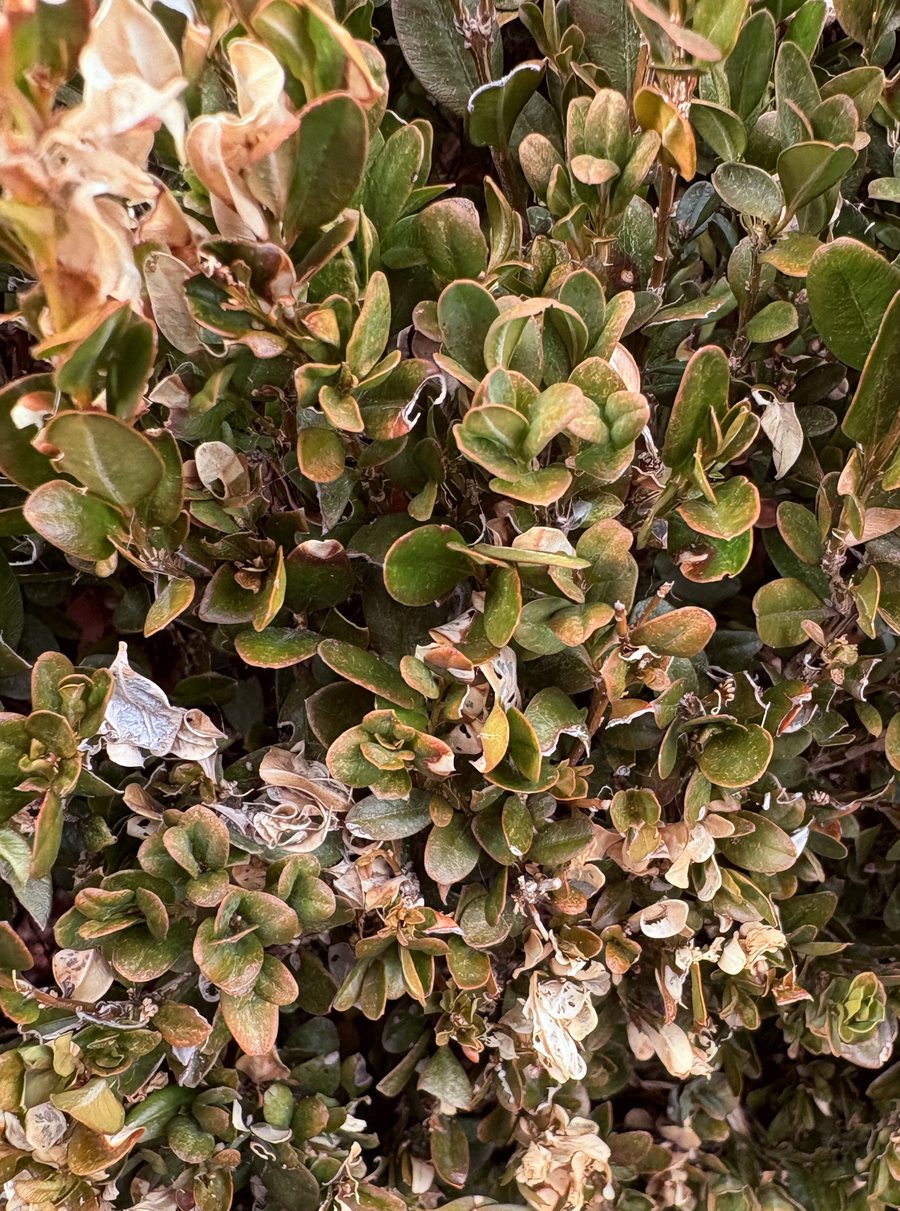
- Yellow-bronze leaves overall — magnesium deficiency. Common on box, and the main thing a Buxus-specific feed addresses.
- Pale, sparse growth — underfed, or the granules were never watered in.
- Fast, soft, floppy growth — too much nitrogen. Stop, and switch to a balanced feed next season.
- Yellowing only on the lower inner leaves — usually shade and airflow rather than nutrition. Thin the hedge instead of feeding it more.
Frequently asked questions
What is the best fertiliser for box hedges in the UK?
A Buxus-specific granular feed applied in March–April and again in June–July. Box needs magnesium to keep its deep green colour and steady rather than rapid nitrogen, which is why general high-nitrogen fertilisers cause problems. TOPBUXUS GROW is the one we use.
When should I feed my box hedge?
Twice: once in March or April as growth restarts, and again in June or July for the second flush. Stop feeding after August — late nitrogen produces soft growth that the first hard frost kills.
Why is my box hedge turning yellow?
Most often magnesium deficiency, which box is particularly prone to and which shows as an overall yellow-bronze cast. A Buxus-specific feed containing magnesium usually corrects it over a season. If the yellowing is confined to the lower inner leaves it is more likely shade and poor airflow than nutrition.
Can I use ordinary fertiliser on box?
You can, but a general high-nitrogen feed produces fast, soft growth with thin cell walls, which frost damages and box blight colonises easily. It also will not supply the magnesium box needs. Blood, fish and bone plus Epsom salts is a reasonable budget alternative if you would rather not buy a proprietary feed.
Should I feed a box hedge that caterpillars have stripped?
Yes, but only once you are sure the caterpillars have gone — otherwise you are producing fresh growth for them to eat. Check for fresh frass first. After that, granular feed in spring and midsummer plus a foliar feed every four to six weeks will noticeably speed up recovery.
How much fertiliser does my hedge need?
Work from surface area, not length. The 500 g pack covers about 10 m² of box; the 5 kg covers 100 m² and is much better value for anything more than a short run. A 10 m hedge a metre deep and a metre tall is far more box than 10 m of low edging.
Do I need to water granular feed in?
Yes, if the soil is dry. Granules sitting on dry ground do not release nutrients. In a dry spring, water the hedge thoroughly after applying — otherwise the feed simply sits there until it rains.
Read next
How to Revive a Dying Box Hedge
Box recovers from total defoliation if the stems are alive. Assess, clear the infestation, prune, feed — and a realistic recover…
ReadTOPBUXUS Health-Mix Review: Does It Stop Box Blight?
Health-Mix is a foliar feed, not a fungicide — and that distinction matters. An honest review after four seasons using it on bli…
ReadThe Best Box Tree Caterpillar Treatment in the UK (2026)
After every season of box tree caterpillar in my own Surrey garden since 2019, here is what actually works, what to buy first, a…
Read