How to Identify Box Tree Caterpillar: 7 Signs to Look For
 Bleached, papery leaves
 Webbing across the foliage
 A damaged patch in a green hedge
 Bronzing — a different problem
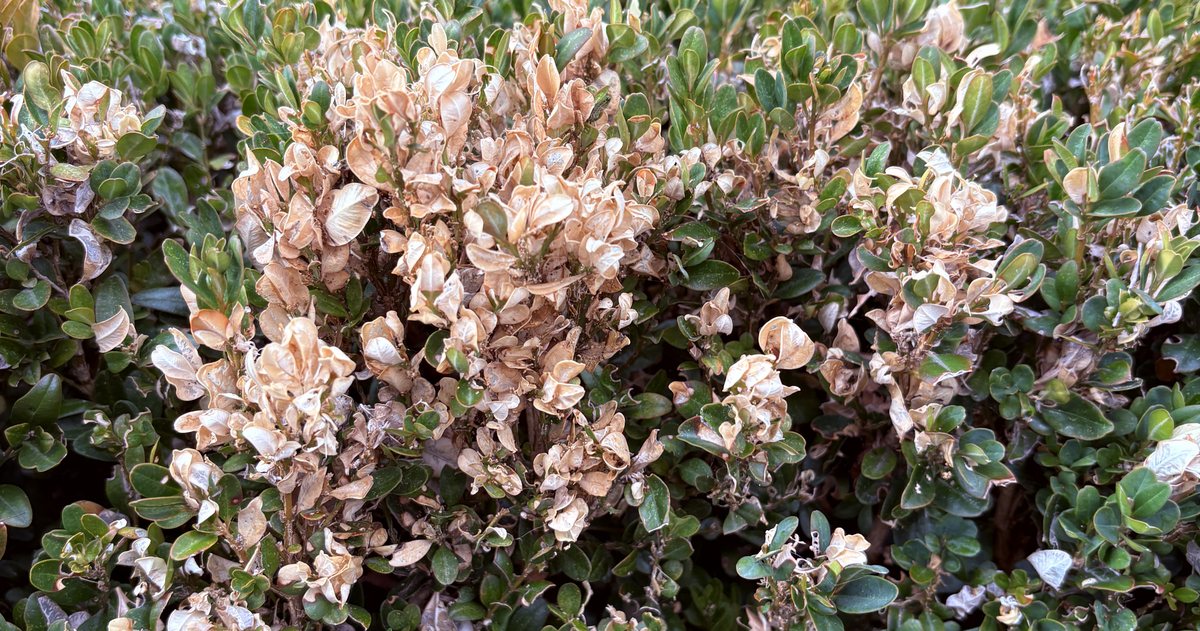
Catching box tree caterpillar early is the single most important thing you can do to protect your box hedges. By the time most gardeners notice the damage — browned, defoliated patches and bare stems — the caterpillars have been feeding for weeks, and the damage is severe. This guide shows you exactly what to look for, when to look for it, and how to tell the difference between box tree caterpillar and the other common box disease: box blight.
Key Takeaway
Do not wait until you see damage. The earliest signs of box tree caterpillar are frass (tiny green droppings) beneath the plant and fine webbing inside the foliage. If you see either of these, act immediately — the caterpillars are already feeding.
The Seven Signs of Box Tree Caterpillar
These are the signs to look for, listed in the order they typically appear. The first three are the earliest indicators and may be present before any visible leaf damage occurs.
1. Frass (Caterpillar Droppings)
Frass is often the very first sign of an infestation. It appears as tiny pellets — roughly 1-2 mm across — that are initially bright green (the colour of digested box leaves) and gradually turn brown as they dry. You will find frass on the soil surface beneath the box plant, caught in the webbing between leaves, and on the lower foliage of the plant.
To check for frass, crouch down and look at the ground directly beneath your box plant. If you see a scattering of small green or dark pellets that were not there before, suspect box tree caterpillar and inspect the plant immediately.
2. Webbing
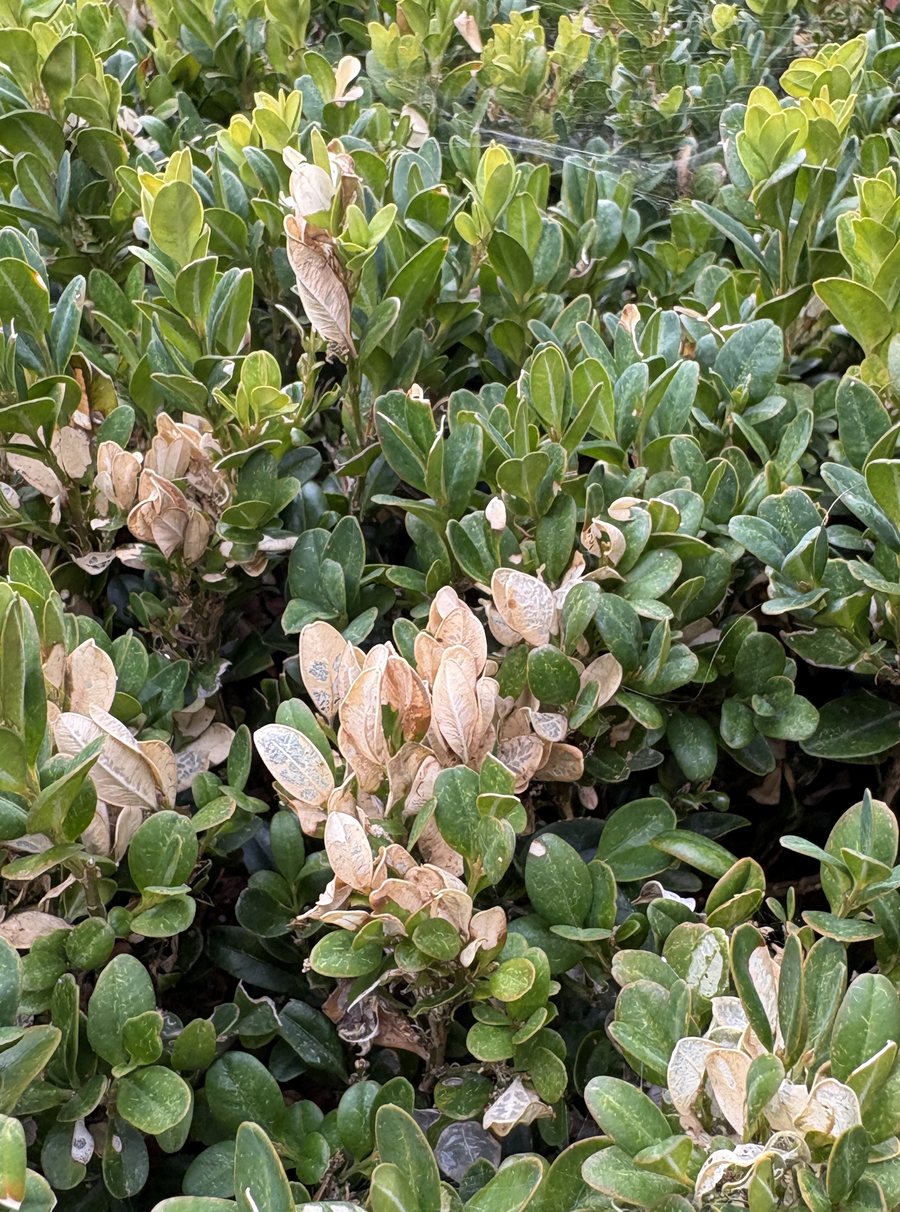
Box tree caterpillars spin white, silken webbing amongst the leaves and inner shoots of the box plant. In early infestations this webbing is fine and difficult to spot without parting the outer foliage and looking inside. In severe infestations, thick webbing can cover entire sections of the plant, often matted with frass and shed caterpillar skins.
The webbing is distinctive and unlike anything produced by spiders. It forms a fine gauze or curtain between leaves and shoots, rather than the radial patterns of spider webs. If you see webbing inside your box plant, you almost certainly have box tree caterpillar.
Recommended
TOPBUXUS ABC — Anti Box Tree Caterpillar — 15 g treats 150 m² · 5 × 3 g sachets
3. Skeletonised Leaves
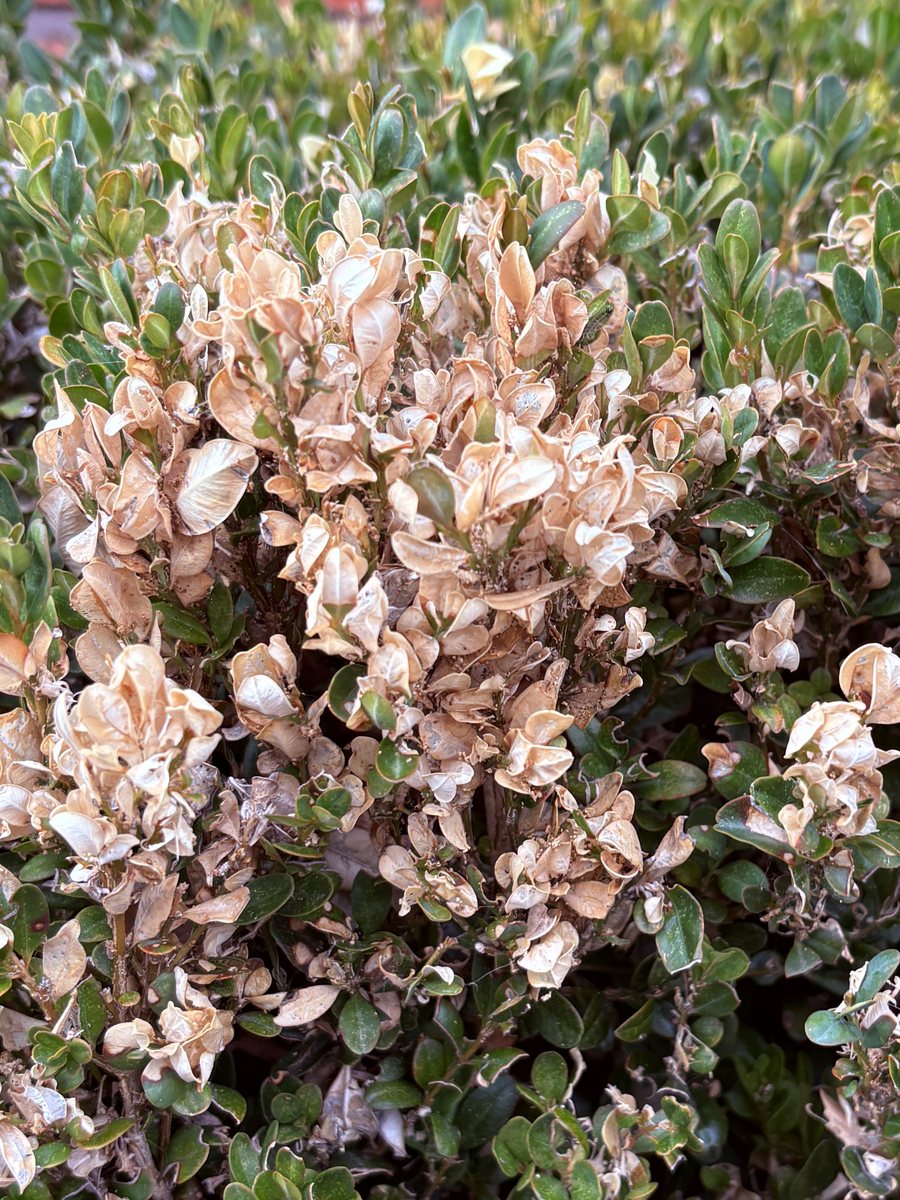
As caterpillars feed, they eat the green leaf tissue from the surface of box leaves, leaving only the transparent outer membrane. This creates a characteristic skeletonised or lace-like appearance — the leaves look papery, translucent, and pale rather than the normal deep green.
Skeletonised leaves are usually found on the inner branches first (where the caterpillars shelter) before the damage spreads outward. By the time skeletonisation is visible on the outer surface of a hedge, a significant amount of damage has already been done inside.
4. Complete Defoliation
In severe infestations, the caterpillars eat not just the surface of the leaves but the entire leaf. This results in bare, brown branches stripped of all foliage. Defoliation typically progresses from the interior of the plant outward and can happen shockingly quickly — a healthy-looking box hedge can be reduced to bare stems within two to three weeks during peak feeding.
5. Bark Stripping
This is the most serious sign and occurs only in severe infestations where the caterpillars have exhausted the leaf supply. Desperate caterpillars will strip the thin green bark from the stems of the box plant. When the bark is stripped all the way around a stem (girdling), that section of the plant dies permanently and cannot regenerate. If you see bark stripping, the infestation is severe and treatment is urgent.
Recommended
TOPBUXUS ABC — Anti Box Tree Caterpillar — 15 g treats 150 m² · 5 × 3 g sachets
6. The Caterpillars Themselves
Box tree caterpillars grow from approximately 1 mm at hatching to around 4 cm when fully grown. Their appearance changes as they mature:
Early stage (1-10 mm): Pale greenish-yellow, almost translucent. Very difficult to spot. They tend to shelter deep inside the plant.
Mid stage (10-25 mm): Distinctly greenish-yellow with emerging black head and developing black and white longitudinal stripes along the body.
Late stage (25-40 mm): Clearly green-yellow with bold black and white stripes, black head, and visible body segments. Easy to identify at this stage.
To find the caterpillars, put on gloves and carefully part the outer branches of the box plant, looking on the undersides of leaves and within the webbing. They are most active in the evening and at night — checking after dark with a torch can be very effective.
7. Adult Moths
The adult box tree moth (Cydalima perspectalis) has a wingspan of approximately 40-45 mm. The most common form has white or very pale wings with a distinctive iridescent brown border around the edges. A less common dark form exists, with entirely brown wings and a small white mark. The moths are most active at dusk and are attracted to light — you may see them near outdoor lights or windows in the evening during the flight season (May to October).
Seeing adult moths near your box plants means eggs have already been laid or will be imminently. Begin checking for small caterpillars within one to two weeks of seeing the moths.
The Box Tree Caterpillar Life Cycle in the UK
Understanding the life cycle helps you time your monitoring and treatment for maximum effectiveness.
Eggs: Laid by female moths in overlapping clusters of 5-20 on the undersides of box leaves. They are pale yellow-green and flat, making them extremely difficult to spot. Each female can lay up to 300 eggs in her lifetime.
Larvae (caterpillars): Hatch within 2-3 weeks. The caterpillars feed for several weeks, growing through multiple moults (instars) before spinning a cocoon to pupate. In the final generation of the year, small caterpillars spin a silken hibernaculum (overwintering cocoon) between two leaves and enter dormancy until the following spring.
Pupae: The caterpillar spins a white silken cocoon within the box foliage and pupates inside for approximately 7-14 days before emerging as an adult moth.
Adult moths: Emerge, mate, and lay eggs. Adult moths live for approximately 2 weeks. They are strong fliers and can travel considerable distances.
In the UK, there are typically two complete generations per year, with a possible third generation in warm years. This means you may face three separate waves of caterpillar damage between March and October.
Month-by-Month Monitoring Calendar
Use this calendar to know exactly when and what to look for throughout the year:
| Month | What to Look For | Action |
|---|---|---|
| January-February | Overwintering caterpillars hidden in cocoons between leaves. Very difficult to spot. Frass may be visible beneath plants from autumn feeding. | Part foliage and look deep inside for small cocoons and webbing. If found, apply XenTari on a mild, dry day. |
| March-April | Overwintered caterpillars resume feeding as temperatures rise above 7-8°C. Small caterpillars (1-2 cm), fresh green frass, early webbing appearing. | Critical monitoring period. Check plants every 5-7 days. Apply XenTari at first sign of active caterpillars. |
| May-June | First-generation caterpillars reaching full size (3-4 cm). Heavy webbing and frass. Skeletonised leaves becoming obvious. First adult moths may appear from late May. | Treat with XenTari if not already done. Deploy pheromone traps to monitor moth flight. Manual removal of large caterpillars. |
| July-August | Second generation of eggs hatching. New small caterpillars appearing. Adult moths from first generation flying and laying eggs. Peak moth trap catches. | Apply XenTari for second generation. Check traps weekly. Inspect plants fortnightly. |
| September-October | Possible third generation in warm years. Late-season caterpillars feeding before overwintering. Bark stripping may occur if food is scarce. | Treat if active caterpillars found. Late-season caterpillars spin overwintering cocoons in October. |
| November-December | No active feeding. Caterpillars overwintering as small larvae in silken cocoons between leaves. | Clean up fallen leaves and frass from beneath box plants. Plan next year's treatment calendar. |
Box Tree Caterpillar vs Box Blight: Quick Comparison
One of the most common mistakes gardeners make is confusing box tree caterpillar damage with box blight (a fungal disease). The treatments are completely different, so correct identification is critical. Here is a quick comparison:
| Box Tree Caterpillar | Box Blight | |
|---|---|---|
| Webbing | Yes — white silken threads between leaves | No |
| Frass (droppings) | Yes — small green/brown pellets | No |
| Caterpillars visible | Yes — green/yellow with black stripes | No |
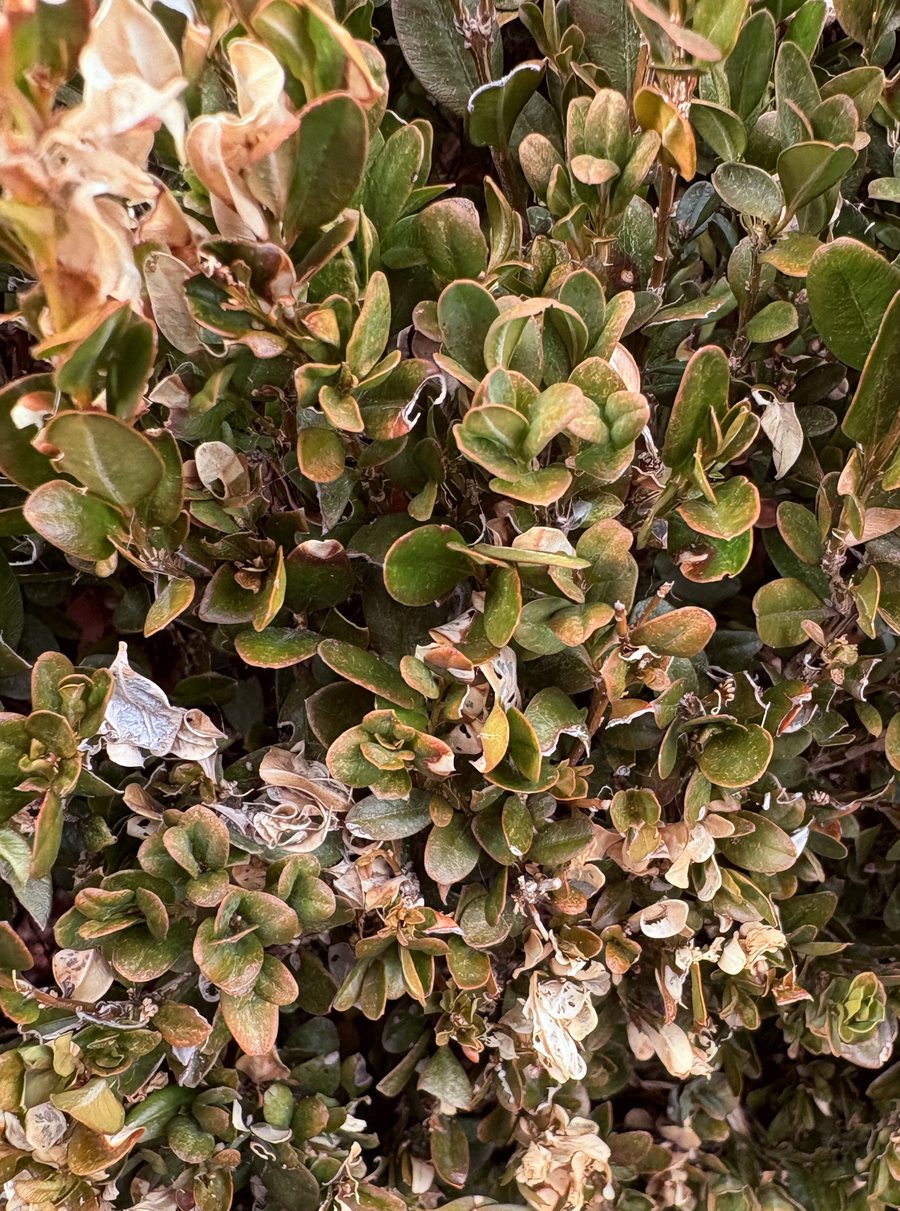
| Leaf appearance | Skeletonised (lace-like, eaten away) | Brown spots, then leaf drop |
| Stem damage | Green bark stripped in severe cases | Black streaks on stems |
| Smell | None | Sometimes musty |
| Speed of damage | Rapid — days to weeks | Gradual — weeks to months |
If you are unsure, the simplest test is to look for frass and webbing. If either is present, you have box tree caterpillar (you may also have blight alongside it). If there is no frass and no webbing but leaves are brown-spotted and dropping, it is more likely box blight. For a full detailed comparison, see our dedicated guide: Box Blight vs Box Tree Caterpillar — How to Tell the Difference.
What to Do If You Find Box Tree Caterpillar
If your inspection reveals any of the signs described above, take action immediately:
Small/early infestation: Begin manual removal of caterpillars (pick them off into soapy water) and apply XenTari as soon as possible.
Moderate infestation: Apply XenTari immediately, ensuring thorough coverage of all leaf surfaces including the interior. Re-apply after 7-10 days.
Severe infestation: Combine manual removal of the largest caterpillars with XenTari application. You may need three applications at 7-10 day intervals.
For detailed treatment instructions, see our complete Box Tree Caterpillar Treatment Guide.
TOPBUXUS ABC — Anti Box Tree Caterpillar
15 g treats 150 m² · 5 × 3 g sachets
The current TOPBUXUS Bacillus thuringiensis product and the direct replacement for the XenTari sachets UK gardeners have used for years. Caterpillars stop feeding within about an hour and die within a few days.
What works
- Stops feeding within about an hour
- Completely safe for bees, birds, pets and children
- Five separate 3 g sachets — no waste, no scales needed
- Three-year shelf life, so a box lasts several seasons
What to watch
- Only works if the spray reaches inside the plant
- Needs re-applying every 7–10 days during an active generation
- Degrades in UV — has to go on in the evening
Frequently asked questions
What does box tree caterpillar look like?
Box tree caterpillars are bright greenish-yellow with black heads and distinctive black and white longitudinal stripes running the length of their bodies. They grow to approximately 4 cm long when fully mature. Early-stage caterpillars are much smaller (1-10 mm) and pale greenish-yellow, making them harder to spot.
What does box tree caterpillar damage look like?
The earliest sign is frass (small green or brown droppings) on the ground beneath the plant. This is followed by white silken webbing between leaves, skeletonised leaves that appear papery and lace-like, and eventually complete defoliation leaving bare brown stems. In the most severe cases, the caterpillars strip green bark from the stems.
When should I check for box tree caterpillar?
Begin monitoring in March when overwintered caterpillars resume feeding, and continue through to October. Check your box plants every 1-2 weeks during this period, parting the outer foliage and looking inside for frass, webbing, and caterpillars. The most critical periods are March-May (first generation) and July-August (second generation).
Can I have both box blight and box tree caterpillar at the same time?
Yes, and unfortunately this is increasingly common. Box blight weakens the plant, making it less able to recover from caterpillar defoliation, and the combined effect can be devastating. If you see both fungal symptoms (brown spots, black stem streaks, leaf drop) and caterpillar symptoms (webbing, frass, skeletonised leaves), you will need to treat both conditions separately — a biological insecticide for the caterpillars and a fungicide for the blight.
Is box tree caterpillar in my area?
As of 2026, box tree caterpillar is established across virtually all of England, Wales, and parts of Scotland and Ireland. It is particularly prevalent in London, the south-east, and the Home Counties, but has been recorded in every English region. If you have box plants in the UK, assume that box tree caterpillar is present or will arrive in your area. Proactive monitoring is strongly recommended regardless of your location.
Read next
Box Blight vs Box Tree Caterpillar: How to Tell the Difference
Webbing and frass mean caterpillar. Brown leaf spots and black stem streaks mean blight. A two-question test, and what to do abo…
ReadHow to Get Rid of Box Tree Caterpillar: The Complete Guide
Every treatment for box tree caterpillar, step by step: Bt spray, manual removal, traps and recovery. Tested in a Surrey garden …
ReadWhen to Spray for Box Tree Caterpillar (UK Timing Guide)
Timing decides whether Bt works. Here is exactly when to spray in the UK, how to know a generation has started, and why April ma…
Read